
Clayton Previous Residents by Era
A backward address trail uses sources with different time spans. The current online start date for EagleWeb has not been stated by the county, so test the earliest live result instead of assuming a cutoff. When the online record trail ends, the Johnston Heritage Center’s deed microfilm becomes the documented historical route. Directories and the Clayton Precinct registration book add dated household clues, but their geography and coverage are not the same as a complete list of former occupants.
| Source | Years it covers | Where held | What it can show |
|---|---|---|---|
| EagleWeb deed index | Online range not stated | Johnston Register of Deeds online | Recorded grantor, grantee, images, and instrument details. |
| Johnston deed microfilm | 1759-1947 | Johnston Heritage Center | Historic deed books and images that may need manual book or page work. |
| Clayton town census table | 1880-2010 listed; 1870 blank | Johnston Heritage online table | Town population context, not an address or household record. |
| Clayton Township census table | 1870-2010 | Johnston Heritage online table | Broader geography that must not be substituted for the town. |
| Johnston County directory | 1947 | DigitalNC PDF and Heritage contributor | Dated names, addresses, and relationship marks across the region. |
| Hill’s directories | 1957, 1959, 1961, 1963 | DigitalNC | Regional entries, rural delivery, and Clayton references. |
| Clayton Precinct registration book | 1950-1970 | DigitalNC and Hocutt-Ellington contributor | Historical registration and residence fields, not a current directory. |
Start with the newest source that actually ties to the address. A recent parcel and purchase deed can establish the land trail. A dated directory or registration book may then help identify a household for a particular period. Census figures provide geography and time context, not an automatic address match.
Clayton Address Deed Lead
Current tax information is the practical lead for previous residents research. Use the Johnston County Public Access portal or MapClick to identify the parcel or PIN, physical address, tax owner, mailing address, acreage, value, and tax-card link. Preserve the physical address and mailing address as separate facts. One locates the parcel, while the other may identify where tax mail went.
The legal description is the link worth carrying into the deed index. It can name a subdivision, lot, plat, or other land description that survives a street-number change or spelling variation. The Tax Office can answer questions about cards and older or offline material at 919-989-5130. The map and tax card are leads, not a certified title opinion and not proof of who stayed at the address.
The Johnston County Tax Office’s public-access links point back to county property resources.
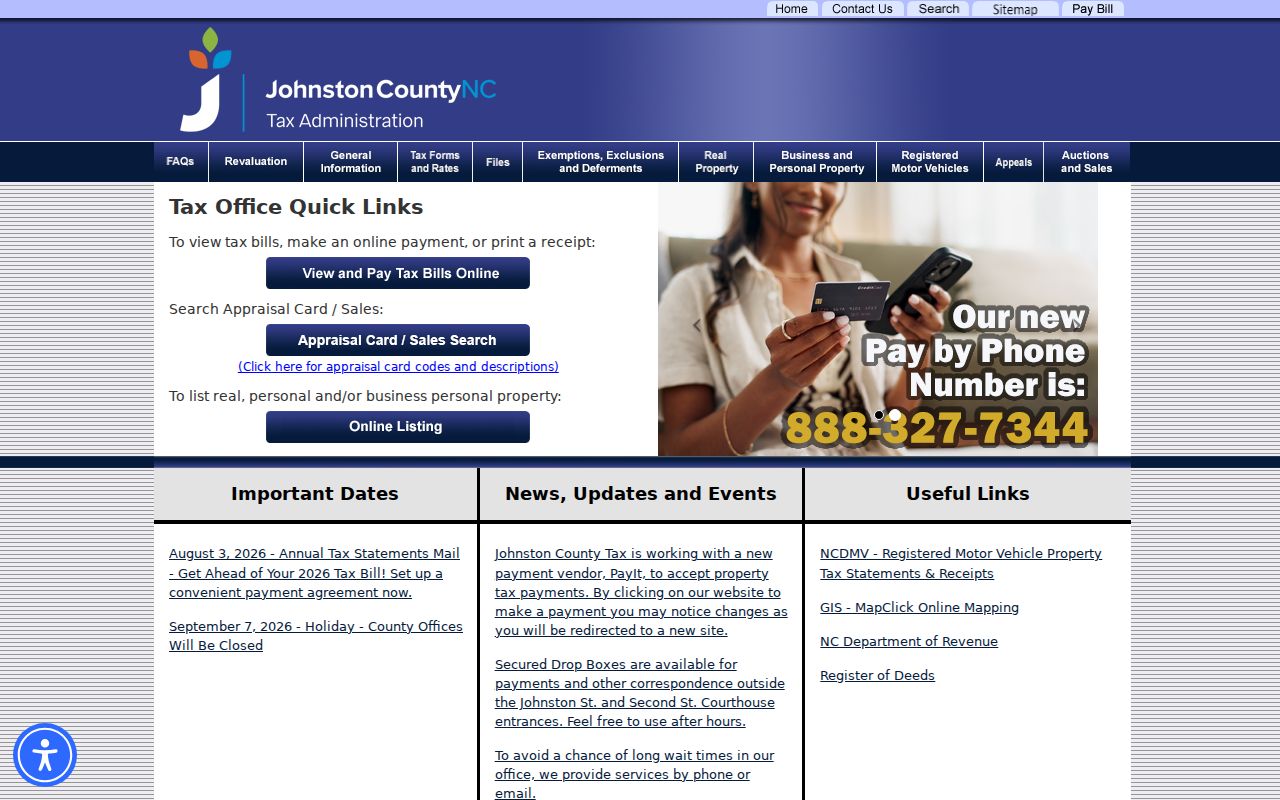
Use the tax record to reach the land trail, then test the same legal description in the recorded instruments.
Johnston Register of Deeds land-information guidance explains the county’s address-to-tax-department route before a recorded-document search.
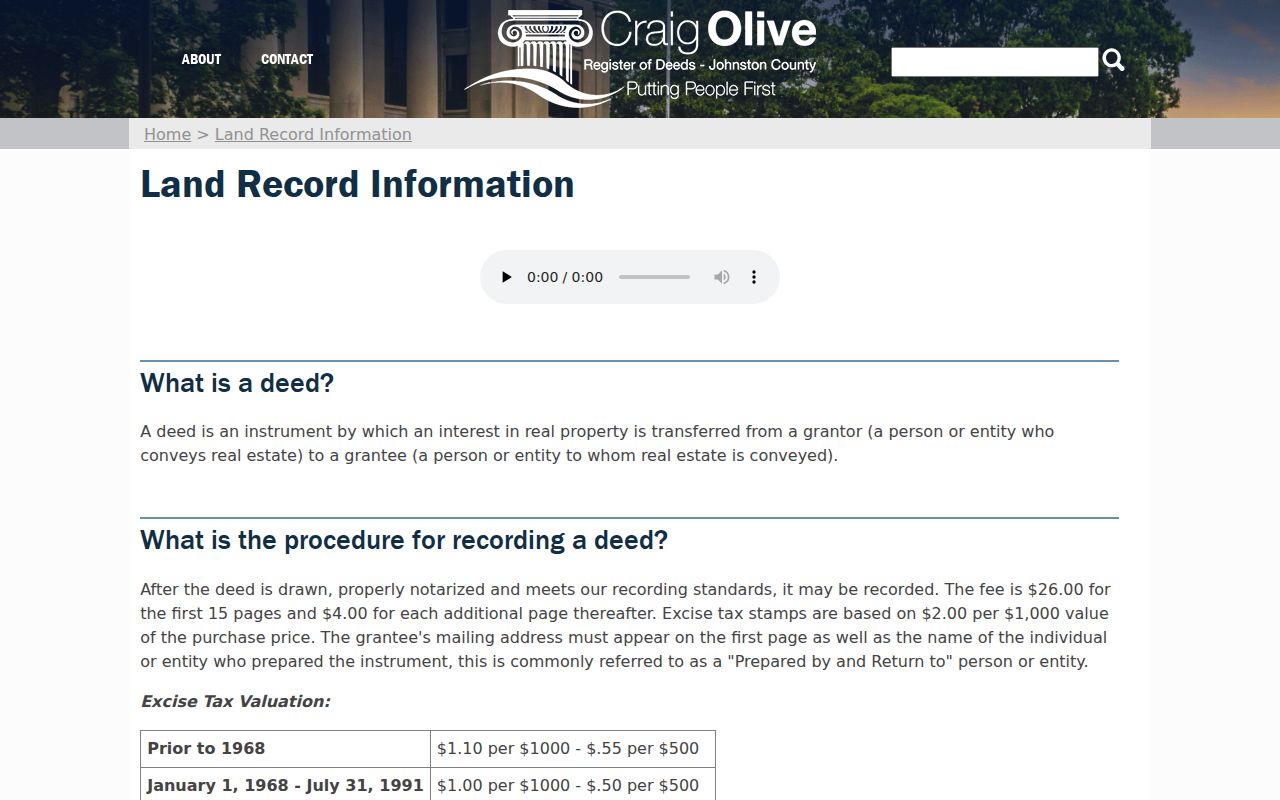
That sequence keeps an address inquiry tied to a parcel before name similarities are used as a historical connection.
Note: A tax owner, a physical address, and a tax mailing address are separate facts and should be recorded separately in every Clayton address trail.
Trace Clayton Previous Residents
Use EagleWeb to search grantor, grantee, reception number, date range, and document type. Search the current tax owner as a grantee first, inspect the newest conveyance, and compare the legal description, subdivision or lot wording, and PIN reference with the parcel. The seller on that conveyance becomes the next name to test. Continue only while the instruments point to the same land.
- Record the current parcel, physical address, tax owner, and legal description from the county tax and map tools.
- Search the owner as grantee in Johnston County EagleWeb and open the purchase deed or related conveyance.
- Capture the reception number, recording date, parties, document type, book or page if shown, legal description, and any related instrument.
- Search the seller as a grantee to locate that party’s earlier purchase, then compare the land description again.
- When the live index or image trail stops, take the exact book, page, party, and land details to the Heritage Center’s historical deed microfilm.
- Grantor
- The party transferring an interest in a recorded instrument. A grantor is not automatically a former occupant.
- Grantee
- The party receiving an interest in the instrument. A grantee can be an individual, trust, or organization.
- Chain of title
- The recorded sequence of land transfers that can be followed backward through matching legal descriptions.
- Legal description
- The subdivision, lot, plat, or other land wording used to identify property beyond a street-address label.
Johnston County’s ROD help recommends name variants. EagleWeb’s Find Related can help surface instruments sharing a legal description or existing document reference. Record each item on its own merits. A deed of trust, release, easement, or plat has a different purpose from a conveyance.
Clayton Address Microfilm Years
The Heritage Center fills the documented pre-1948 deed route. Its microfilm inventory lists Johnston deeds from 1759 through 1947, while the online EagleWeb start date remains unstated. That contrast matters. A blank web search does not establish that a property had no earlier recorded history. It may simply mark the point where research shifts from a portal to microfilm, books, abstracts, maps, and private collections.
The center is at 241 E Market Street in Smithfield. Its reading room is generally open Monday through Friday, 9 to 5, with Saturday access by appointment. Contact the center before traveling, because materials can be offsite or non-circulating. The center lists a mail-research minimum of $40, lineage-society research minimum of $80, and copies or scans generally at $5 per item. Use the exact book, page, name, and legal-description details to make a request focused.
The Register of Deeds fee schedule provides the county’s current recording and copy information.
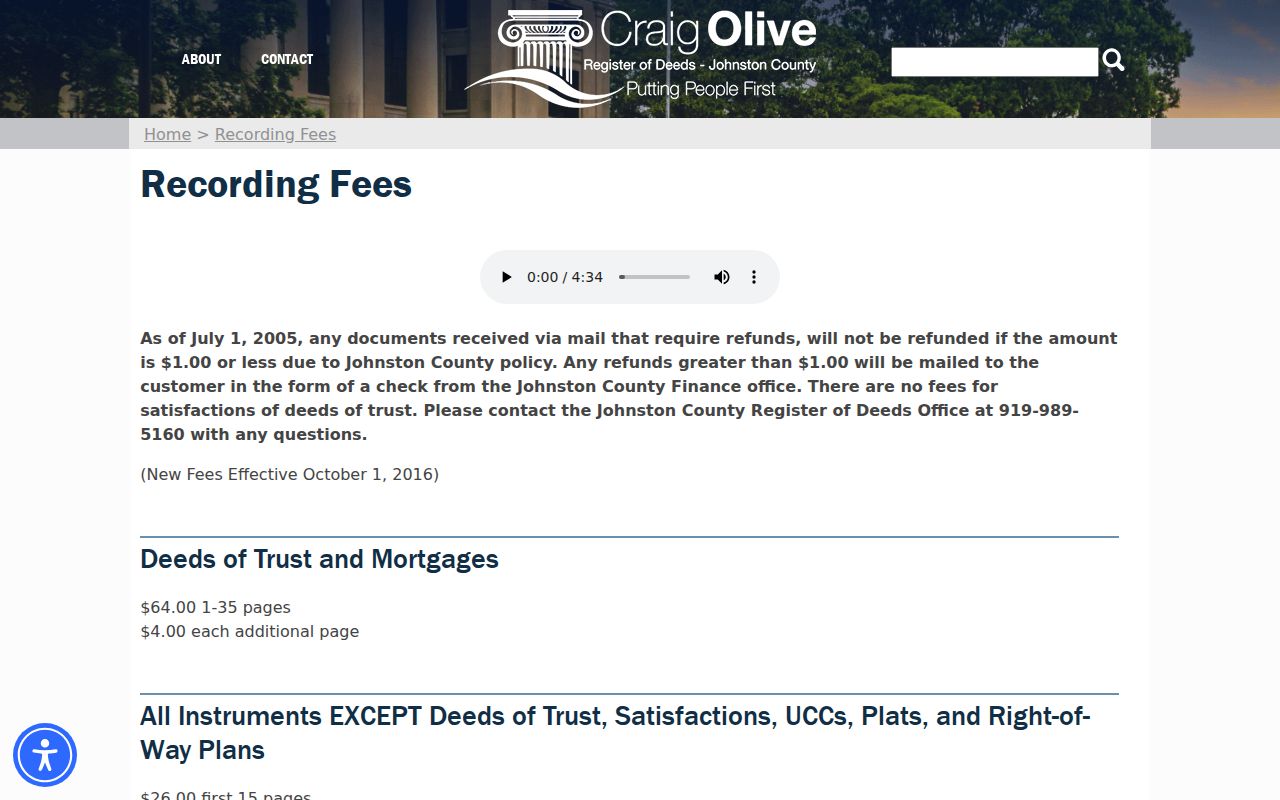
Online index access, plain copies, certified copies, and historical research are separate access routes, so choose the route that fits the exact question.
Clayton Past Households by Address
Recorded ownership is only part of an address history. A directory, registration book, newspaper, obituary, or census item can place a person or household at a place and time, but each source has its own geography. The 1947 Johnston County City Directory has regional coverage, and the Hill’s directories are Smithfield-Selma and Johnston-area material with Clayton references. Read the scan, preserve the page, and do not enlarge an abbreviation into a claim the entry does not make.
The 1947 directory can include a name, residence marker, street address, relationship notation, and other context. A Hill’s entry can use rural-delivery language. Neither proves that every person at a modern Clayton street was in town limits. The fuller descriptions of these historical shelves remain on the Clayton city directory page; use them here only as dated address evidence alongside the deed chain.
Note: Preserve a directory’s title, year, page, and regional label before linking its address wording to a Clayton parcel or deed.
Clayton Previous Residents Timeline
Pair a directory year with a census period only after the place name and geographic label agree. Clayton incorporated in 1869, and older records may use Clayton Township, Stallings’ Station, rural delivery, a precinct, or a nearby community. The incorporated-town census table and the Clayton Township table are not interchangeable. The federal 72-year release rule also means the newest generally released full census schedule is older than present-day records.
- Start with the deed date or a dated directory entry tied to the address or legal description.
- Check whether the entry says Clayton, Clayton Township, rural delivery, or another Johnston County location.
- Use the nearest released census period as a time and household cross-check, not as proof of a street number unless the schedule supports it.
- Compare the result with a newspaper, obituary, cemetery record, permit, or later deed when the household trail has a gap.
The Hocutt-Ellington and Heritage collections can help explain a title, year, microfilm item, or private vertical-file source. DigitalNC’s 1947 directory scan is also a useful starting image, but OCR should be verified against the original page.
Clayton Address Permit Trail
Permits can help date changes to a property without identifying a complete household. Johnston County’s online permit search reaches back six years, and older records require the department route. The county search instructions use a numeric house number and full street name while omitting direction and street type. Record the service address, project date, work type, status, and any public applicant or owner field without treating a project record as residency proof.
Clayton’s ePermits and the Permit Clayton Hub are a municipal complement where the address is inside the town’s system. The town announced more than 20 public record and form types in the Hub in July 2026. These can include zoning verification, floodplain, sign, driveway, development, wastewater, and transportation material. A result may bridge a blank period between a deed and a directory, but it does not fill every gap in an address history.
Clayton Previous Residents Endpoints
When a deed chain reaches a deceased owner, an obituary, cemetery record, or Clerk estate file can add a date and family connection. The Clayton library announced a local obituary index in March 2026 using funeral records, donated collections, and vertical files, including John Barnes, Virginia Satterfield, and Hodges Funeral Home material from the 1950s and 1960s. Treat it as a finding aid with gaps. Ask for the original item or scan, and pair it with a dated address source.
The Register of Deeds does not hold every record connected to a name. Johnston Clerk handles court, estate, special-proceeding, and divorce material, while the ROD FAQ distinguishes those boundaries and notes that military discharges are not public. A business or assumed-name record can offer historical context, but a business address or registered-agent address is not a home-address claim.
The Johnston County ROD FAQ outlines those record-custody boundaries.
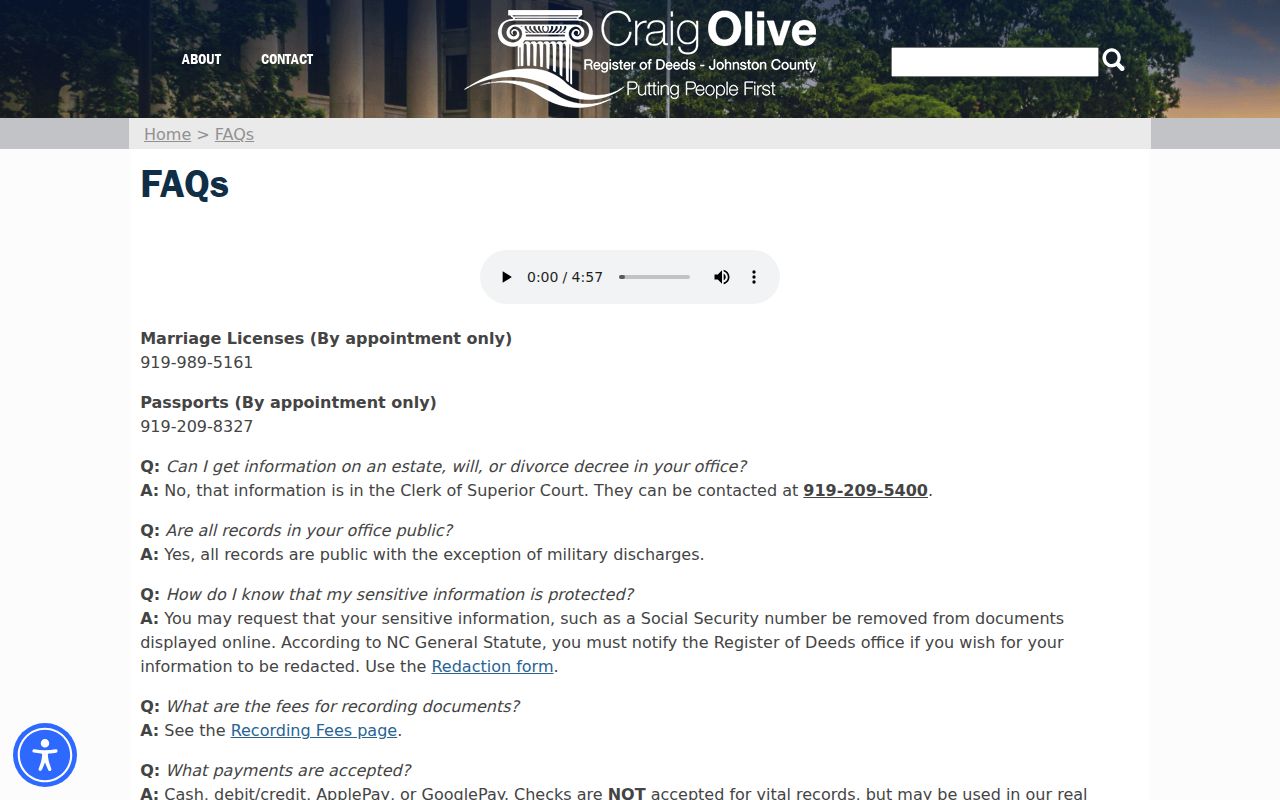
Using the right custodian prevents an address trail from stopping at the wrong county office.
When the address trail points to a person’s death or estate, use the Clerk for estate or special-proceeding files and the Register of Deeds for recorded instruments. A business filing, registered-agent address, or other organizational record can be historical context, but it does not establish that an individual lived at the Clayton address. Keep any entity record separate from the deed, directory, obituary, or tax-card evidence that directly concerns the property.
Clayton Address Names Before Incorporation
Clayton’s historical name context helps explain why a direct modern-name search can miss a record. The official local history connects the area with Stallings’ Station before Clayton incorporated in 1869. Search the older place name alongside Clayton for nineteenth-century deeds, newspapers, and family material. A date, legal description, township reference, or railroad-era place name can be the bridge when a modern street label is absent.
Johnston County was organized in 1746, and the Heritage Center describes colonial-era courthouse material as well as deeds, wills, court minutes, and marriages. The reviewed official history did not verify a courthouse fire, flood, or other specific record-loss event. Leave missing years as an archive question for the Heritage Center, Clerk, or State Archives rather than filling the gap with a local legend.
Note: A historical address can require a deed, plat, directory, map, newspaper, and place-name check before an earlier Clayton connection is sound.