
Clayton City Directory Holdings by Year
Clayton does not have a verified, continuous Clayton-only printed city-directory run in the reviewed official catalog. The usable city directory holdings are instead a set of Johnston-area volumes, school books, newspapers, and finding aids. The 1947 Johnston County volume and the Hill's Smithfield-Selma volumes are valuable because they preserve names and addresses near Clayton, but their geography must be read on every page. Digital copies are useful for discovery. The printed scan remains the record to check when initials, route labels, or abbreviations matter.
| Collection | Years | Where Held | Access |
|---|---|---|---|
| Johnston County City Directory | 1947 | DigitalNC PDF and Heritage contributor | Online scan; verify OCR against the page image. |
| Hill's Smithfield-Selma directories | 1957, 1959, 1961, 1963 | DigitalNC | Online catalog and PDF; regional coverage. |
| Clayton, Cooper, and Clayton Middle yearbooks | 1926 to 2009, with gaps | Johnston County Heritage Center and Hocutt-Ellington Memorial Library | Reading room or digitized item where available. |
| Clayton News and Clayton News-Star | 1914 to 1969 | DigitalNC and library newspaper access | Issue images online plus local licensed access. |
The 1947 Johnston County City Directory record is the clearest starting volume for this collection.
The Heritage Center holdings page identifies the local archive's books, microfilm, maps, photographs, and private collections.
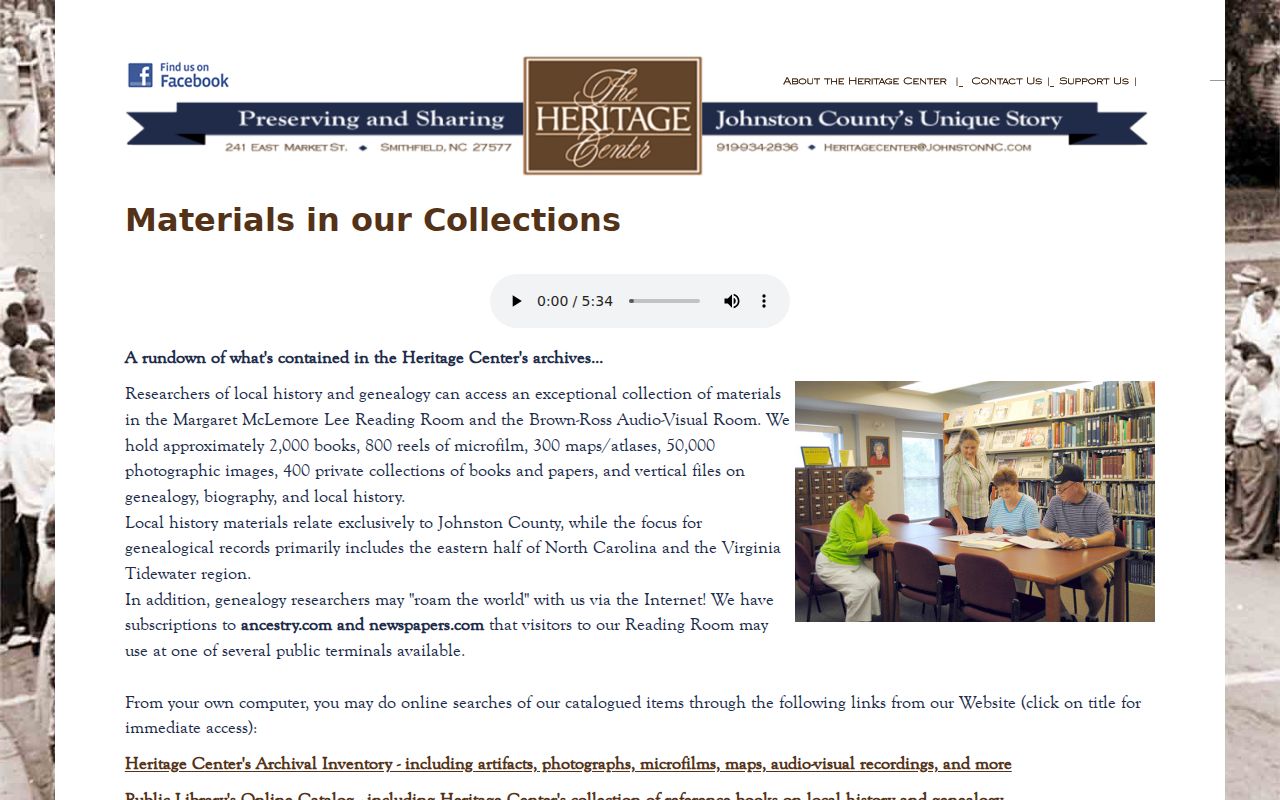
These holdings give a directory search a physical fallback when an online item is incomplete or an OCR result needs a closer review.
For a library copy or archive request, name the volume, year, page, and the item sought. The library may hold related materials offsite, while DigitalNC offers the scan route for the documented directory volumes. An archive staff member can also point to a newspaper issue, yearbook, census index, or vertical file that supplies the missing place detail.
Clayton City Directory Geography Matters
The Hill's volumes cover Smithfield, Selma, and Johnston County rather than a single municipal list. Their 1963 OCR includes rural-delivery examples marked RD 2 Clayton, plus entries elsewhere in the regional directory. That makes an RD label a postal clue, not proof of residence inside Clayton's town limits. The same caution applies to a Smithfield or Selma page that names a business, school, or relative connected with Clayton.
The 1963 Hill's directory record provides a downloadable scan for checking the printed column and its heading.
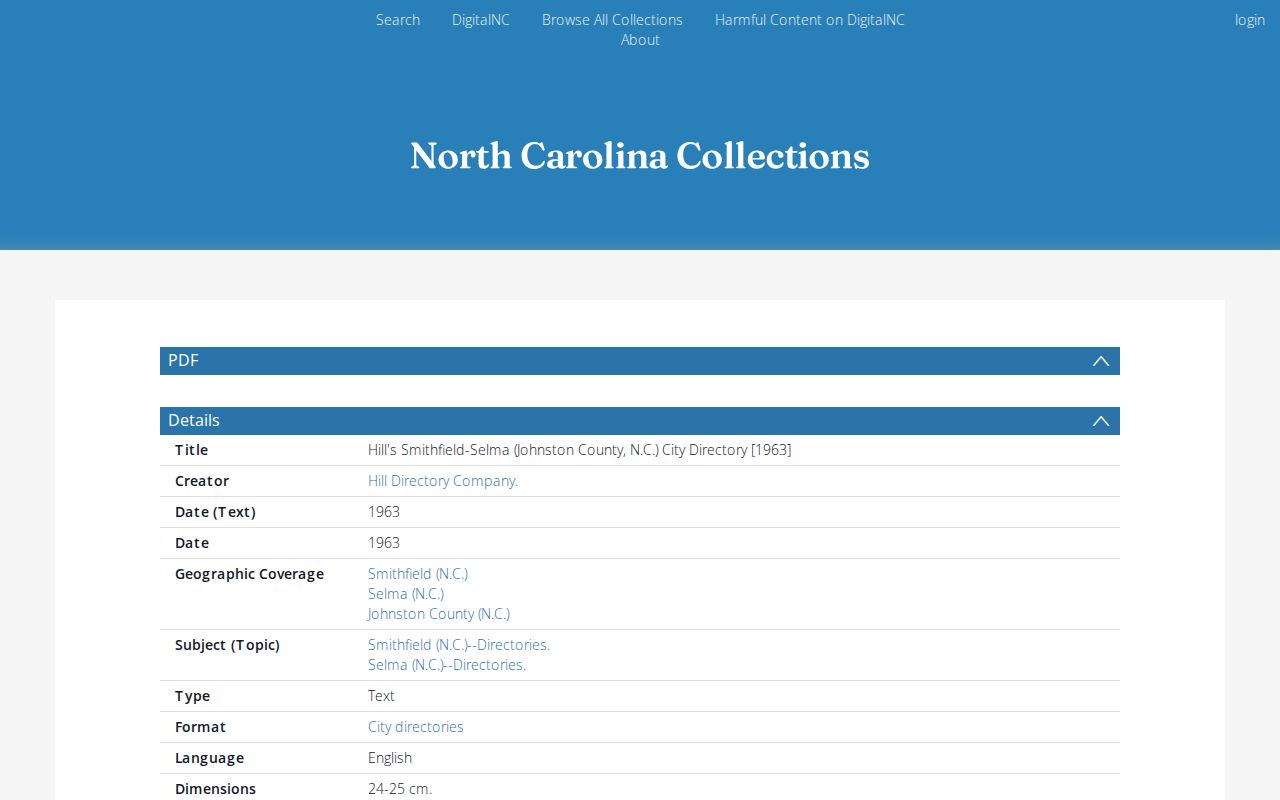
Copy the page number and the exact geography stated in the volume. That small step prevents a regional directory hit from becoming an unsupported Clayton claim.
Note: No official catalog reviewed established a complete Clayton-only title or a continuous reverse-directory series.
Clayton's 1902 Directory Snapshot
Clayton's older place names add another layer to directory research. The town grew from a railroad stop first called Stallings' Station and incorporated in 1869. A nineteenth-century deed, paper, or family file may therefore use a name that does not match a modern Clayton search. Search the historic name alongside Clayton when the date falls before the town's established modern usage.
The 1902 North Carolina year book and business directory supplies a compact local snapshot: it records Clayton's population as 754 and lists civic offices, the post office, rail service, churches, a school, banks, cotton buyers, stores, physicians, and Clayton Cotton Mills. It is a period record of what appeared in that publication, not a present-day directory.
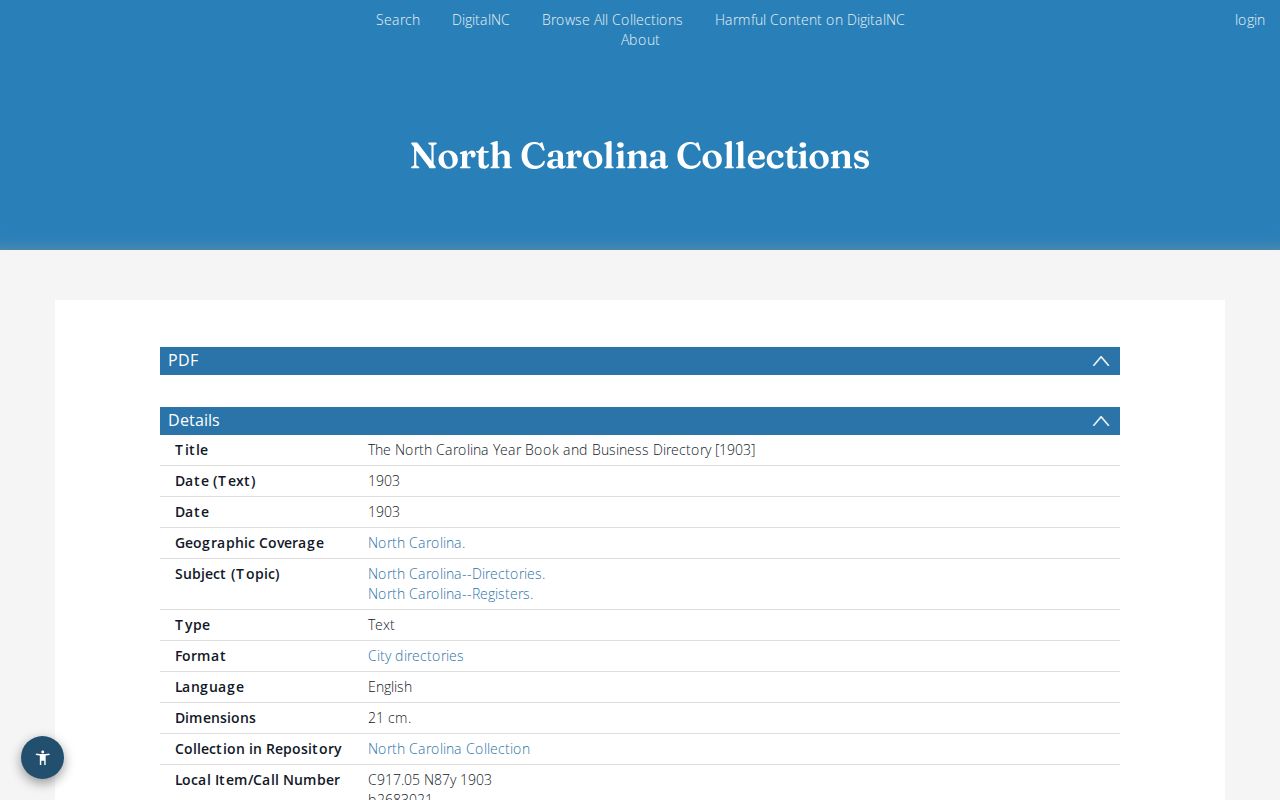
This kind of directory page can supply institution names for a newspaper or archive search, while its date keeps the evidence tied to the correct Clayton era.
The Johnston County history resource provides the county and rail context for interpreting the entry.
It supports the location history behind the search terms, while a scanned directory page remains the evidence for an individual printed listing.
It also shows why a historical directory entry needs a source label. A civic office, rail connection, church, school, or mill listed in 1902 records a relationship in that period. It does not establish a later address, a present organization, or a family connection without another dated record.
Note: A familiar Clayton name in a regional volume does not settle the town, township, or rural-delivery geography of the entry.
Reading Clayton City Directory Entries
A 1947 entry can combine a surname and given name with an r residence marker, a street address, a relationship notation such as “Mrs,” and an occupation or business association. The 1963 material can show a rural route, spouse notation, or street address. Do not expand a letter simply because it seems familiar. The reviewed material did not expose a complete official abbreviation key for these directory runs.
| Printed name | Preserve initials, spelling, and any “Mrs” or relative notation exactly. |
|---|---|
| Residence marker | Record r if printed; do not assign a meaning beyond the volume's context without its key. |
| Address or route | Copy the street, number, or RD label and note the directory geography. |
| Occupation or business | Keep the printed wording as a historical clue, not a current personal fact. |
| Publication detail | Save title, year, page, and scan location so another reader can inspect the image. |
- Criss-cross directory
- A street-order section that can list entries by address when a volume actually includes one. A continuous Clayton run was not located.
- Householder index
- A list arranged around the household name instead of a business category or subject heading.
- Abbreviation key
- The volume's own explanation of short marks. Photograph or transcribe it before interpreting a local entry.
Read the entry as a compact historical observation. A residence marker can help distinguish the address line from a business location, yet it cannot answer every question about who lived at that address during the full publication year. Preserve the printed form before comparing it with a census, deed, or cemetery item.
Clayton Directory Routes and Addresses
Rural delivery is a recurring Clayton directory issue. An entry marked RD 1 or RD 2 Clayton can describe postal geography rather than an incorporated-town address. Compare it with the directory year, the local census label, a deed legal description, a tax card, or a historic map. A modern street number should never be assumed to be the direct equivalent of an older route entry.
Clayton, Clayton Township, a precinct, and a postal address can describe different areas. The Johnston County Heritage Center's census material and deed microfilm are useful companion sources, especially when a household shifts from a street entry to a rural route or disappears for several years.
The Heritage Center lists Johnston deed microfilm from 1759 through 1947 and census research tools for selected federal years. Those records may clarify the place attached to an old route, but each source has its own coverage and should be recorded separately.
Clayton City Directory Leads in Newsprint
The 2026 local obituary index can bridge a directory name to an original funeral file, donated collection, or vertical-file item. It includes material from the John Barnes Collection, Virginia Satterfield Collection, and Hodges Funeral Home records from the 1950s and 1960s. Treat it as a finding aid. A full name, burial place, or relationship should be checked against the original item and another dated source.
The Clayton obituary-index announcement describes that local-history route.
Clayton News and Clayton News-Star, available for 1914 through 1969, provide another dated layer for checking an address, school, church, business, or obituary reference found in a directory.
The Clayton News digitization notice describes access to the 1914 through 1969 run through DigitalNC.
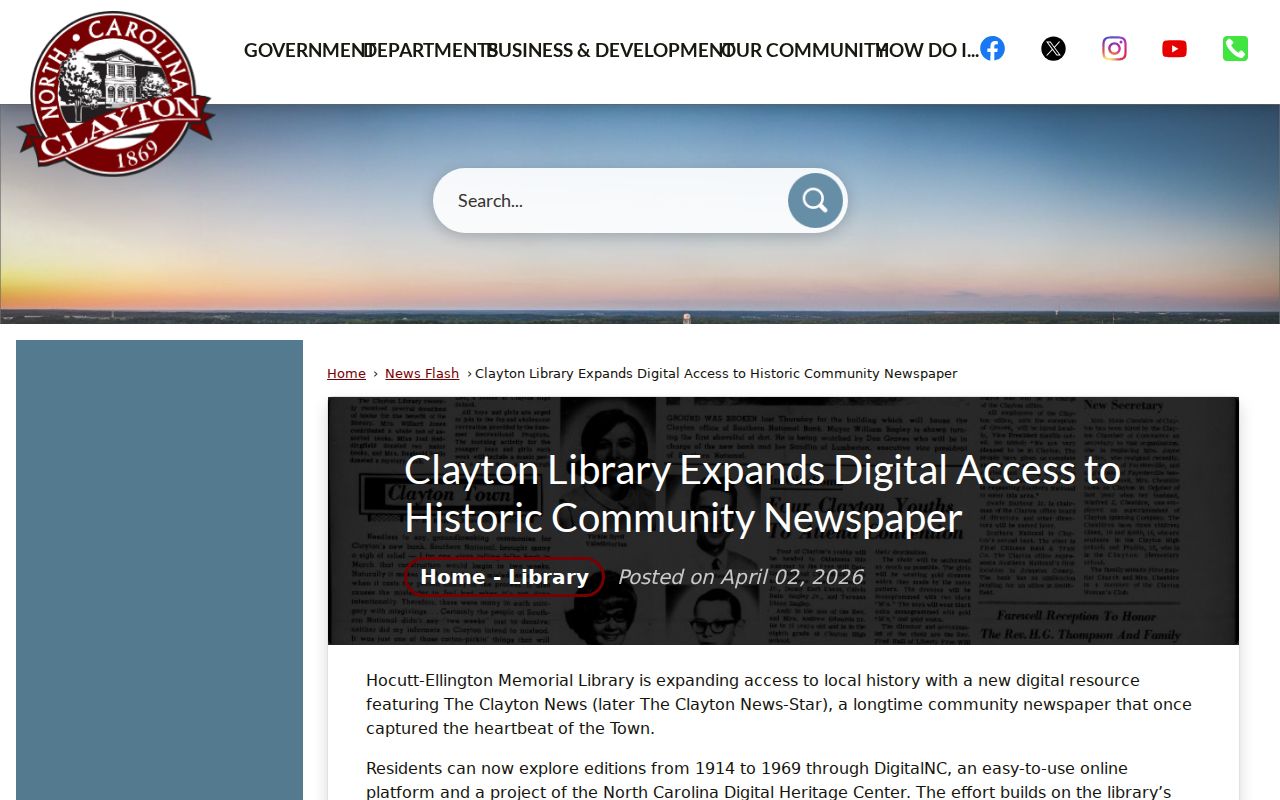
Search an issue by name, street, school, church, business, event, or obituary clue, then read the scanned page rather than trusting the OCR alone.
Newspaper reporting and an obituary are not interchangeable with an address record. A notice can identify a relative, church, burial place, or last-known location, but a directory, deed, census, or cemetery source should supply an independent check when the household trail matters.
Note: OCR helps locate a likely issue, but the issue image is the source for names, dates, and abbreviations.
Clayton Directories beside Yearbooks
School titles provide a time-specific companion to a city directory search. The Heritage Center lists Clayton High volumes for 1926 and selected years from 1952 through 1974, William M. Cooper High titles across several years from 1946 through 1968, Cooper Junior High titles for 1975 through 1977 and 1988, and Clayton Middle books from 1993 through 2009. Pre-1970 items may be available through DigitalNC; physical access varies.
The Heritage Center yearbook inventory identifies the available titles and years.
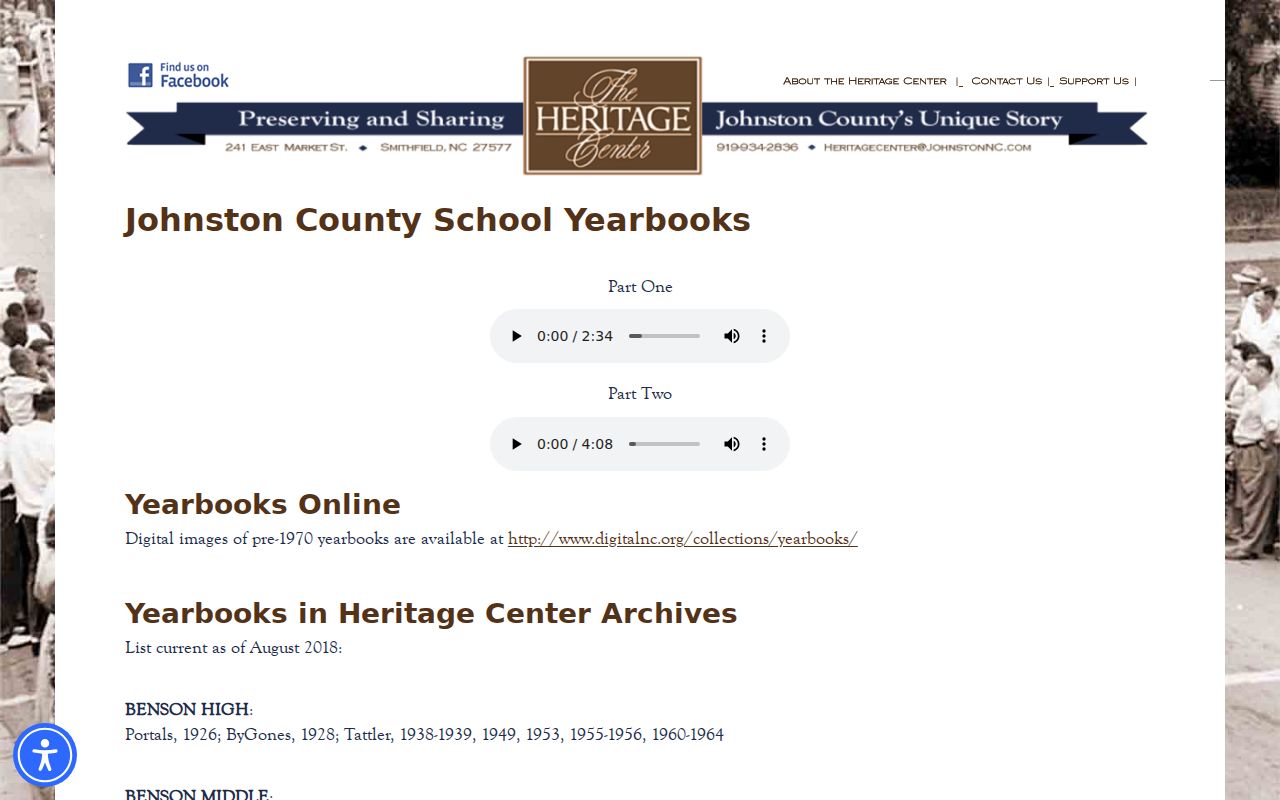
A yearbook can place a person in a class or activity at a particular date. It is historical context, not proof of a current address or a list of contact details.
Keep the title, year, page, class or activity, and image location with the search notes. The local collection has gaps, and a missing yearbook entry is not evidence that a person was absent from Clayton.
Note: Record a yearbook title, year, page, and image location before using it beside a dated directory or newspaper result.
Tracing Families Through Clayton Directories
Use a Clayton city directory trail to test continuity, not to fill every missing year with a guess. Keep the spelling and wording from each volume. Then compare a stable set of details, such as a spouse notation, occupation, route, street, and nearby date. A matching surname alone is weak evidence in a county with repeated family names.
- Find the earliest dated directory entry and record its title, page, geography, and all printed fields.
- Search later regional volumes for the same name, initials, spouse notation, and route or street.
- Pair nearby directory years with the applicable census schedule, keeping incorporated Clayton and Clayton Township separate.
- Use a newspaper, cemetery record, obituary finding aid, or deed when an address change, death, or property link needs confirmation.
- Mark conflicting spellings, missing years, and changes from a street to RD Clayton rather than forcing a single story.
A disappearance can reflect a move, death, an unlisted household, a rural-route change, a gap in the collection, or a different directory geography. For a modern name check after a historical find, use the Clayton resident lookup workflow instead of treating an old city directory as current evidence.
Clayton Directory Archives and Gaps
Hocutt-Ellington Memorial Library and the Johnston County Heritage Center are the local fallback when a web scan fails. The library's local-history collection points to DigitalNC, newspapers, yearbooks, cemetery records, Sanborn Maps, and licensed databases. The Heritage Center reports books, microfilm, maps and atlases, photographs, and private collections, with some physical material stored offsite and non-circulating. Contact staff before a visit or request.
The Johnston County Heritage Center also offers research and copying routes that can help verify an item rather than relying on an OCR fragment.
There is no verified first or last year for a Clayton-only printed directory, no confirmed continuous reverse run, and no complete official abbreviation key in the reviewed sources. Preserve those gaps with the search notes.
The Heritage Center archives search is a separate keyword and category route for locating a related collection or requesting a copy.
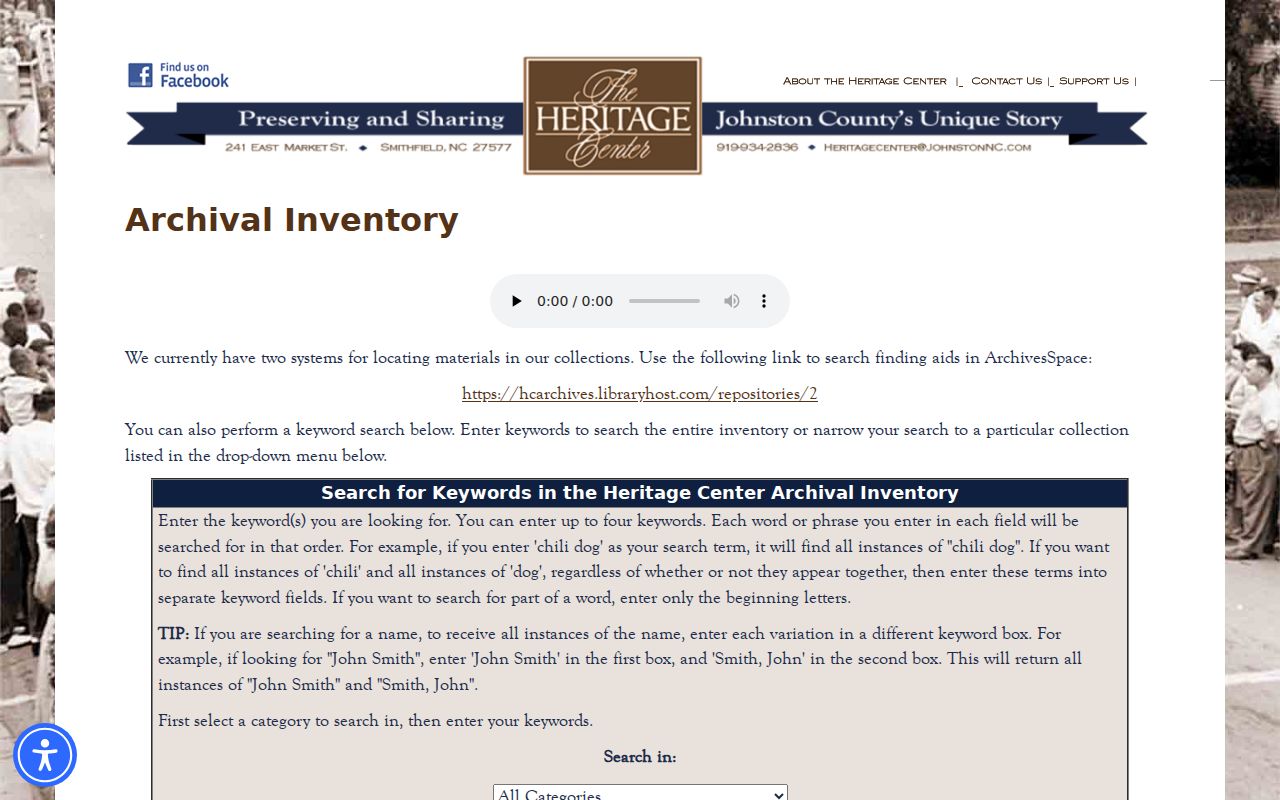
Use a partial name, place, subject, or collection term and retain the returned collection detail with the directory page citation.